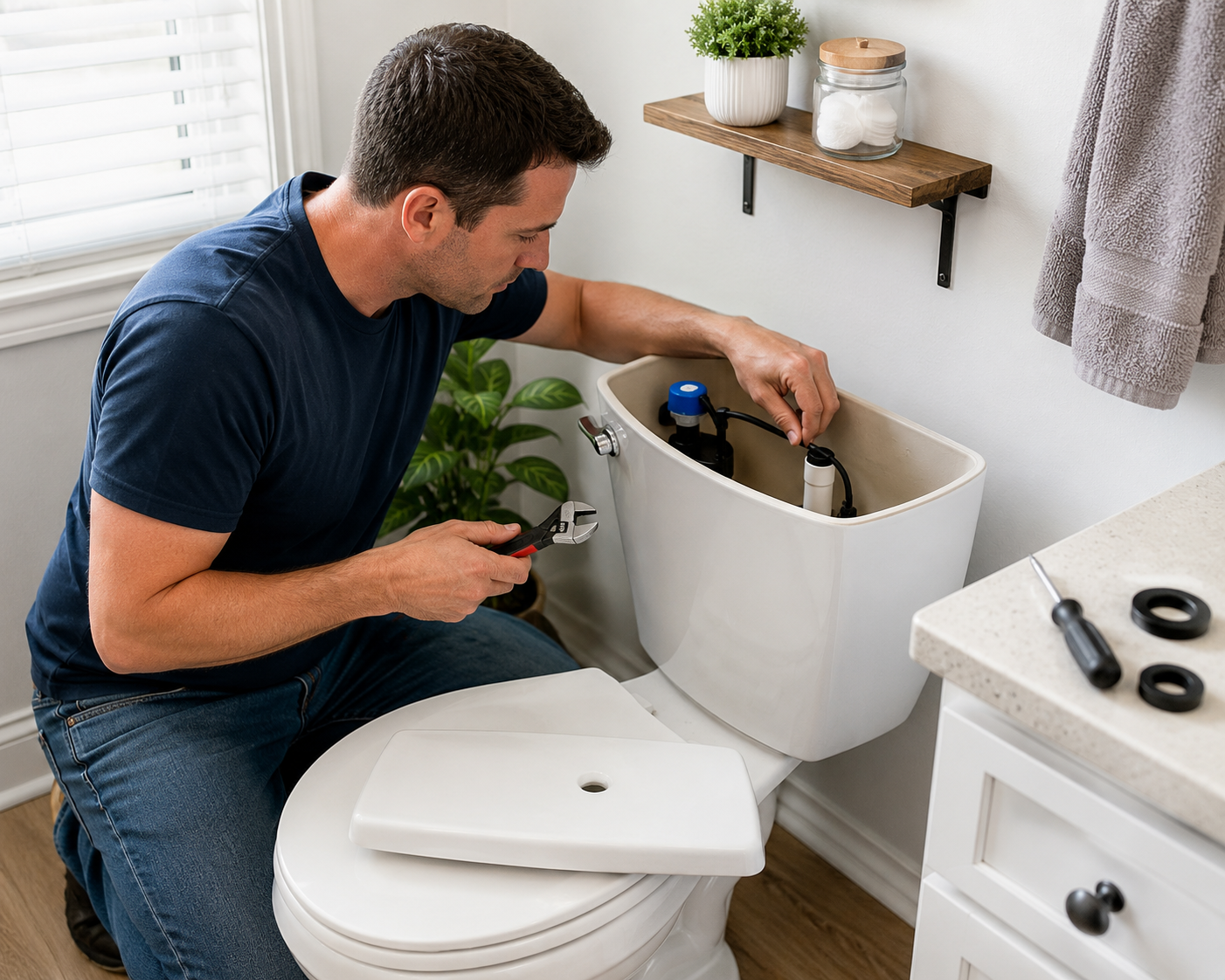
A running toilet is one of the most common plumbing problems homeowners experience. While it may seem minor at first, a toilet that constantly runs can waste hundreds of gallons of water each day and increase your monthly utility bill.
The good news is that many running toilet problems can be diagnosed and fixed without replacing the entire toilet. In this guide, we’ll explain the most common causes of a running toilet, simple DIY troubleshooting steps, and when it may be time to call a professional plumber.
What Causes a Running Toilet?
A toilet continues running when water constantly flows from the tank into the bowl. In most cases, the issue involves worn-out or misaligned internal tank components.
Some of the most common causes include:
- A faulty flapper
- Improper float height
- A damaged fill valve
- A leaking overflow tube
- Chain problems inside the tank
- Mineral buildup or worn seals
Even a small leak inside the toilet tank can waste a surprising amount of water over time.
Common Running Toilet Problems and Fixes
| Problem | Possible Cause | Common Fix |
|---|---|---|
| Toilet constantly running | Worn flapper | Replace flapper |
| Water trickling into bowl | Fill valve issue | Adjust or replace fill valve |
| Tank overfilling | Float set too high | Lower float level |
| Weak or incomplete flush | Chain too loose or tight | Adjust chain |
| Water leaking into overflow tube | Faulty float or fill valve | Adjust water level |
| Toilet cycles on and off | Slow tank leak | Replace internal seals |
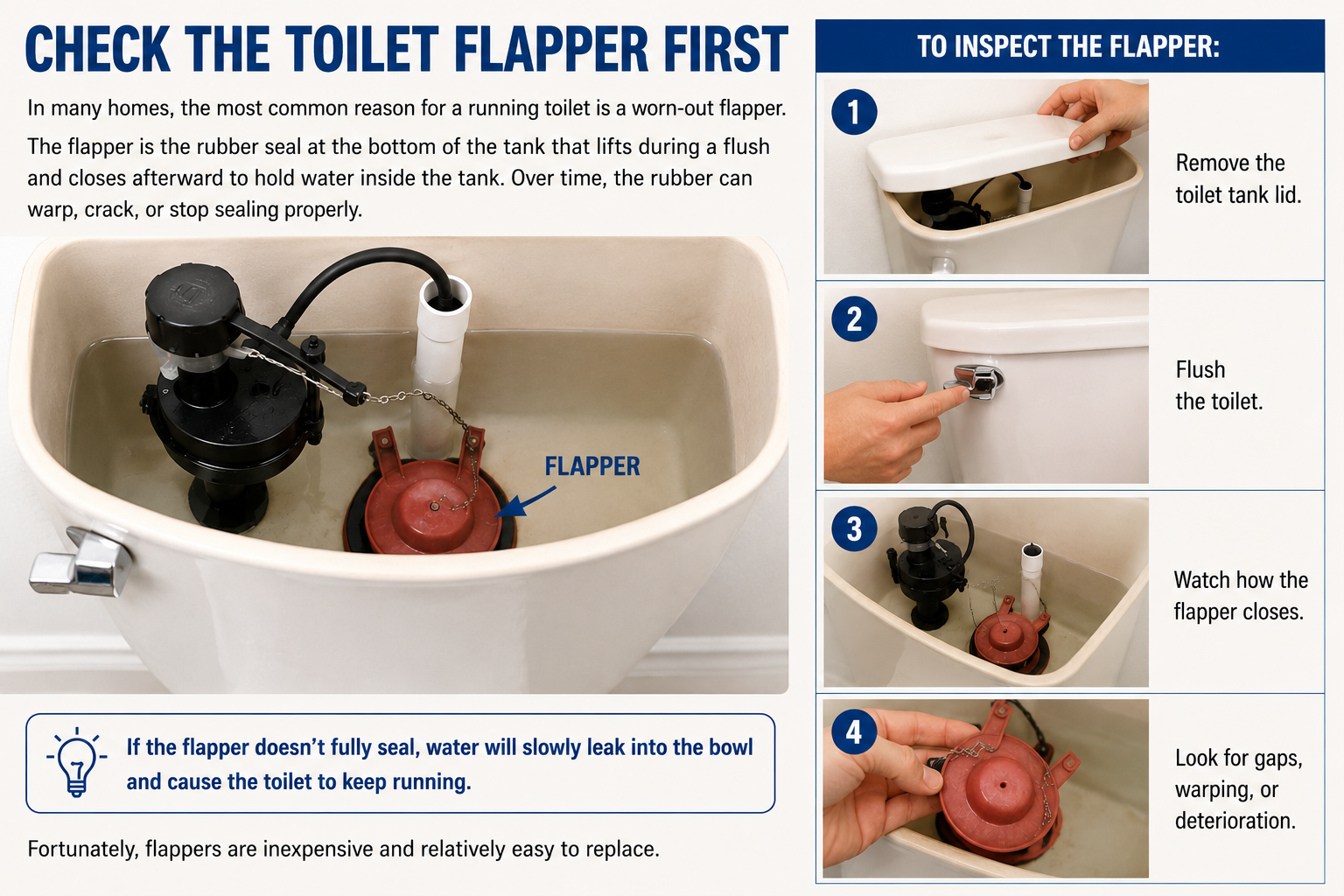
Read our article that explains how to fix a toilet flapper.
Adjust the Float Height
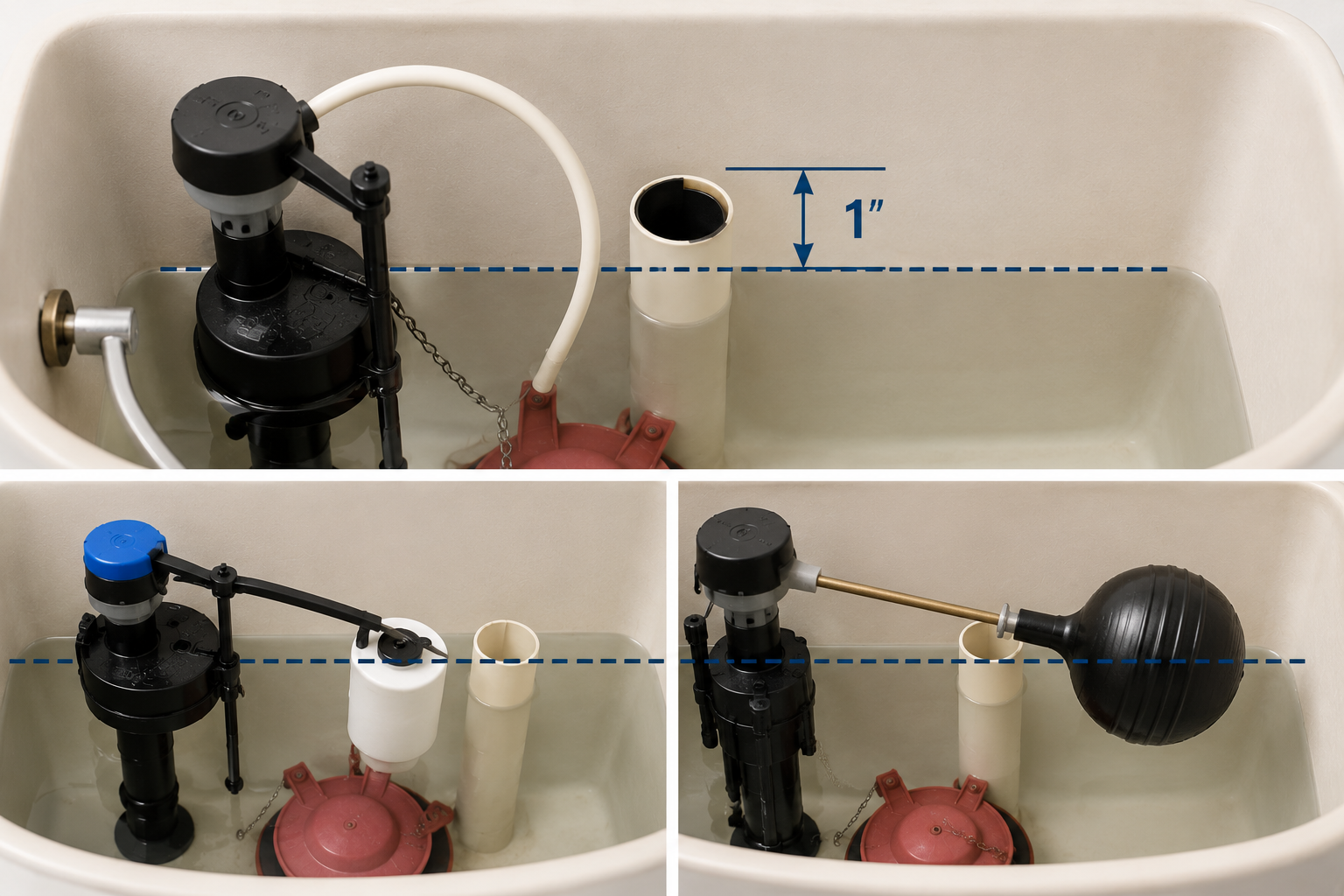
The float controls how much water fills the toilet tank after each flush.
If the float is set too high:
- the tank may overfill
- water may continuously spill into the overflow tube
- the toilet may never fully stop running
Most modern toilets have either:
- a float cup
- a floating ball assembly
Adjusting the float slightly downward often solves the issue.
The water level inside the tank should generally sit about one inch below the top of the overflow tube.
Inspect the Fill Valve
The fill valve controls water entering the tank after flushing.
A faulty fill valve may:
- run continuously
- make hissing noises
- refill slowly
- fail to shut off properly
Mineral buildup from hard water can also interfere with valve performance over time.
Sometimes cleaning the valve helps, but older or damaged fill valves usually need replacement.
Check the Toilet Chain
The chain connected to the flush handle can also cause running toilet issues.
If the chain is:
- too short, the flapper may not fully close
- too long, it may become tangled underneath the flapper
A properly adjusted chain should have a slight amount of slack without getting caught.
This is one of the easiest toilet adjustments homeowners can make themselves.
How Much Water Can a Running Toilet Waste?
Many homeowners underestimate how much water a running toilet can waste.
A continuously running toilet may waste:
- dozens of gallons per day
- hundreds of gallons per week
- thousands of gallons per month
In some cases, homeowners first notice the issue because of an unusually high water bill.
Addressing the problem quickly can help prevent unnecessary water waste and utility costs. Household leaks can waste up to 180 gallons of water per week.
Signs You May Need Professional Plumbing Help
Some running toilet problems are simple DIY fixes, while others may require professional repairs.
You should consider calling a plumber if:
- the toilet continues running after replacing parts
- water leaks around the base of the toilet
- multiple plumbing fixtures are having issues
- the toilet frequently clogs
- there are signs of corrosion or cracked components
- you feel uncomfortable working inside the tank
Older toilets with repeated problems may also benefit from replacement rather than constant repairs.
Can You Prevent Running Toilet Problems?
Routine maintenance can help reduce toilet problems over time.
Helpful preventative steps include:
- avoiding harsh chemical cleaners inside the tank
- periodically checking internal components
- replacing worn flappers early
- monitoring water bills for sudden increases
- inspecting for hard water buildup
Many toilet parts wear out gradually over several years, especially in homes with hard water.
Final Thoughts
A running toilet is usually caused by a problem inside the tank, such as a worn flapper, faulty fill valve, or improperly adjusted float. Fortunately, many of these issues are relatively inexpensive to repair if caught early.
However, if your toilet continues running after basic troubleshooting or you suspect a larger plumbing issue, professional diagnosis can help prevent water waste and more costly repairs.
Call Blue Moon Plumbing for Toilet Repairs & Plumbing Services
If you’re dealing with a running toilet, constant leaks, or other plumbing problems, Blue Moon Plumbing is here to help. Our experienced team provides professional plumbing repairs, gas leak detection, drain cleaning, water heater services, and more throughout the Dallas-Fort Worth area.
Contact Blue Moon Plumbing today to schedule a toilet repair service and get your plumbing system running properly again.
Frequently Asked Questions about Running Toilets
Why does my toilet keep running after I flush?
A toilet usually keeps running because of a worn flapper, faulty fill valve, improperly adjusted float, or water leaking into the overflow tube inside the tank.
Can a running toilet increase my water bill?
Yes. A running toilet can waste hundreds or even thousands of gallons of water each month, which can significantly increase your utility bill if the problem is not repaired quickly.
Is fixing a running toilet a DIY project?
Many running toilet problems can be fixed by homeowners with basic tools and inexpensive replacement parts such as flappers, fill valves, or chains. However, persistent leaks or older plumbing issues may require a professional plumber.
How do I know if the toilet flapper is bad?
A bad toilet flapper may appear warped, cracked, brittle, or unable to fully seal after flushing. If water slowly leaks from the tank into the bowl, the flapper is often the cause.
When should I call a plumber for a running toilet?
You should contact a plumber if the toilet continues running after replacing parts, leaks around the base, frequently clogs, or if multiple plumbing fixtures in the home are experiencing issues.