
A constantly running toilet is one of the most common plumbing problems homeowners face, and in many cases, the issue comes down to a worn-out toilet flapper.
The good news is that replacing a toilet flapper is usually inexpensive, beginner-friendly, and can often be completed in less than 20 minutes without calling a plumber.
In this guide, we’ll explain how to replace a toilet flapper, how to tell when the flapper is failing, and what homeowners should know before starting the repair.
Quick Answer: How Do You Replace a Toilet Flapper?
To replace a toilet flapper:
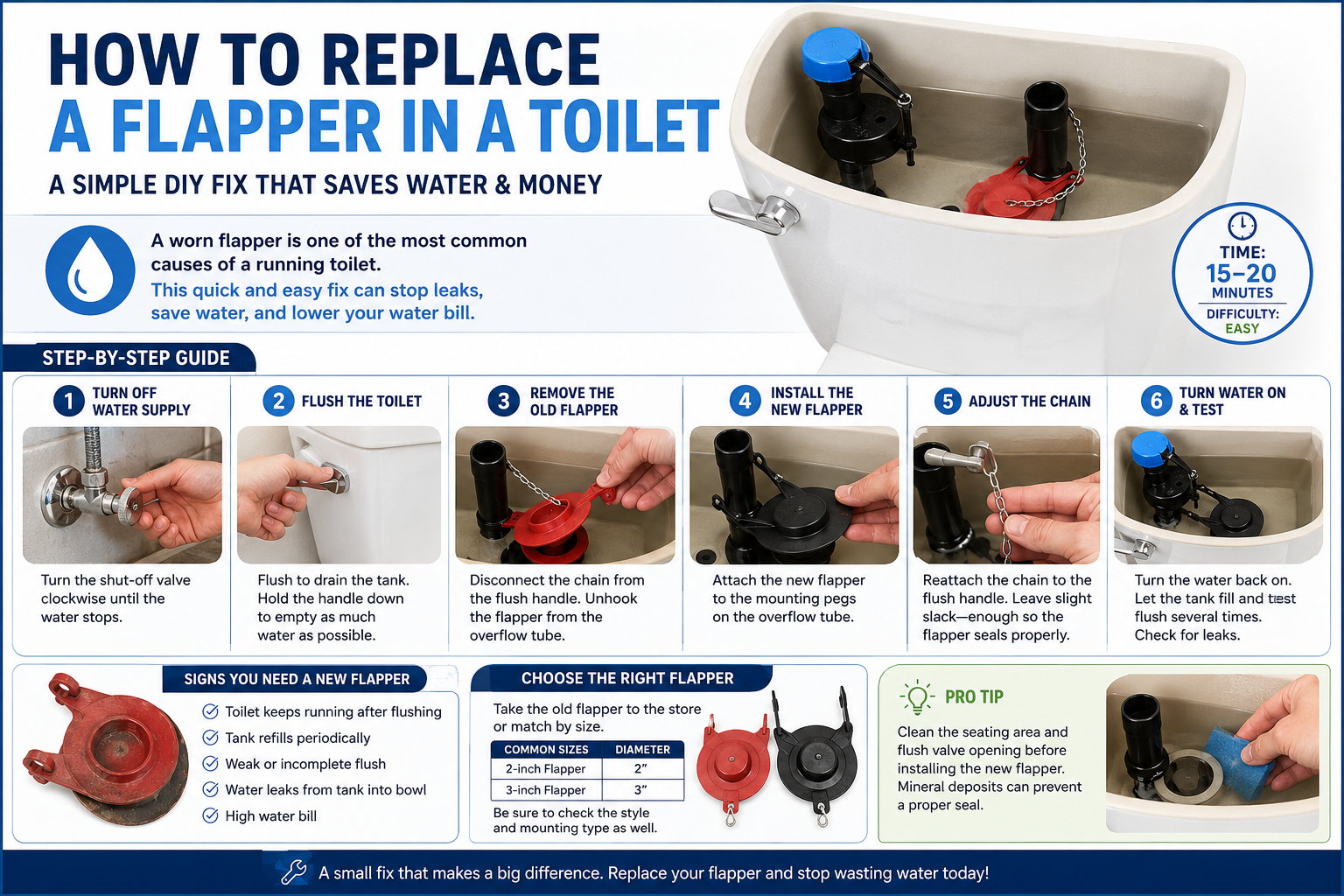
- Turn off the water supply to the toilet
- Flush the toilet to empty the tank
- Remove the old flapper
- Install the new flapper onto the overflow tube
- Reconnect the chain to the flush handle
- Turn the water back on and test the flush
Most toilet flappers are inexpensive and available at hardware stores in universal or model-specific sizes.
What Is a Toilet Flapper?
A toilet flapper is the rubber seal inside the toilet tank that lifts when you flush and closes afterward to allow the tank to refill.
When the flapper becomes worn, warped, cracked, or coated with mineral buildup, water slowly leaks from the tank into the bowl. This causes the toilet to:
- Run continuously
- Refill randomly
- Waste water
- Increase utility bills
In many homes, the flapper is the first toilet component to wear out.
Signs Your Toilet Flapper Needs Replacing
Common warning signs include:
- The toilet keeps running after flushing
- You hear the tank refilling periodically
- The toilet flushes weakly
- Water leaks from the tank into the bowl
- The flapper looks cracked or deteriorated
- Your water bill suddenly increases
A simple food coloring test can help confirm the problem:
- Add a few drops of food coloring into the tank
- Wait 15–20 minutes without flushing
- If color appears in the bowl, the flapper is leaking
Tools and Materials You’ll Need
Most flapper replacements require minimal tools.
Basic Supplies
| Item | Purpose |
|---|---|
| Replacement toilet flapper | New seal |
| Rubber gloves | Optional cleanliness |
| Small towel or sponge | Remove leftover water |
| Scissors | Adjust chain length if needed |
Many homeowners can complete the repair without any specialized plumbing tools.
Step-by-Step: How to Replace a Toilet Flapper
Step 1: Turn Off the Water Supply
Locate the shut-off valve behind the toilet near the wall.
Turn it clockwise until the water stops.
Step 2: Flush the Toilet
Flush the toilet to drain most of the water from the tank.
Hold the flush handle down to empty as much water as possible.
Use a towel or sponge to soak up any remaining water near the flapper if needed.
Step 3: Remove the Old Flapper
The flapper is usually connected by:
- Rubber ears attached to the overflow tube
- A chain connected to the flush lever
Disconnect the chain first, then gently remove the flapper from the mounting pegs.
Step 4: Match the New Flapper
Not all flappers are identical.
Common sizes include:
Keep in mind some toilets require brand-specific flappers. You can also find universal flappers that work with all toilets.
If possible, bring the old flapper to the hardware store for comparison.
Step 5: Install the New Flapper
Attach the new flapper to the overflow tube mounting points.
Reconnect the chain to the flush handle arm.
The chain should have:
- Slight slack
- But not so much that it tangles underneath the flapper
If the chain is too tight or too loose, the toilet may not flush correctly.
Step 6: Turn the Water Back On
Slowly reopen the shut-off valve.
Allow the tank to refill completely.
Flush the toilet several times and watch for:
- Proper sealing
- Smooth flushing
- No continuous running
Toilet Flapper Troubleshooting Chart
| Problem | Possible Cause | Solution |
|---|---|---|
| Toilet keeps running | Flapper not sealing | Re-seat or replace flapper |
| Weak flush | Chain too loose | Adjust chain length |
| Toilet won’t stop refilling | Wrong flapper size | Install proper size |
| Flapper closes too fast | Chain too tight | Add slack to chain |
| Water leaking into bowl | Worn rubber seal | Replace flapper |
| Handle feels stuck | Tangled chain | Reposition chain |
How Long Does a Toilet Flapper Last?
Most toilet flappers last:
- 3–5 years on average
However, lifespan depends on:
- Water quality
- Mineral content
- Frequency of use
- Cleaning chemicals used in the tank
Hard water and chemical tank cleaners can cause flappers to deteriorate faster.
Should You Replace the Entire Flush Valve?
Sometimes the issue is larger than the flapper itself.
If you notice:
- Cracks
- Corrosion
- Persistent leaks after replacing the flapper
- Multiple failing components
…it may make sense to replace the entire flush valve assembly instead.
Common Mistakes Homeowners Make
Buying the Wrong Size
One of the biggest DIY mistakes is purchasing the wrong flapper size or style.
Chain Adjustment Problems
Improper chain length can prevent proper flushing or sealing.
Ignoring Mineral Buildup
Hard water deposits around the valve seat can prevent a proper seal even with a new flapper.
Cleaning the sealing surface before installation can help.
When to Call a Plumber
You may want professional help if:
- The toilet still runs after replacing the flapper
- Water leaks outside the toilet
- The shut-off valve won’t close
- Multiple toilet components are failing
- You suspect a hidden plumbing issue
Sometimes a “simple flapper problem” is actually part of a larger toilet repair. If you need help, get in touch with us through our toilet repair service page.
Final Thoughts
Replacing a toilet flapper is one of the simplest plumbing repairs homeowners can learn. In many cases, it takes less than 20 minutes and can stop a running toilet immediately.
By replacing a worn flapper early, homeowners can:
- Reduce water waste
- Lower utility bills
- Prevent constant running
- Improve flushing performance
For many households, it’s a small repair that makes a surprisingly big difference. Interested in learning more about toilet repairs? Read this article: How long does a toilet wax ring last?
Frequently Asked Questions About Replacing a Toilet Flapper
1. How do I know if my toilet flapper is bad?
Common signs of a bad toilet flapper include a constantly running toilet, random tank refilling, weak flushing, or water slowly leaking from the tank into the bowl. A food coloring test can help confirm whether the flapper is leaking.
2. Can I replace a toilet flapper myself?
Yes. Replacing a toilet flapper is one of the easiest DIY plumbing repairs for homeowners. Most replacements take about 15–20 minutes and require very few tools.
3. Are all toilet flappers the same size?
No. The two most common sizes are 2-inch and 3-inch flappers, and some toilets require brand-specific models. It’s usually best to bring the old flapper with you when purchasing a replacement.
4. Why does my toilet still run after replacing the flapper?
If the toilet continues running, the chain may need adjustment, the flapper may not be sealing properly, or another component like the flush valve or fill valve could be failing.
5. How often should a toilet flapper be replaced?
Most toilet flappers last around 3–5 years, depending on water quality, mineral buildup, and usage. Homes with hard water may need more frequent replacements.