There’s nothing more frustrating than turning on a faucet or stepping into the shower, only to be met with a feeble trickle of water. Low water pressure isn’t just an inconvenience—it signals underlying issues in your plumbing system that, if ignored, might lead to costly repairs. At Blue Moon Plumbing, we’ve helped countless homeowners diagnose and resolve water pressure problems. In this guide, we’ll walk you through the common causes of low water pressure and provide actionable solutions to restore your home’s water flow.
Understanding Low Water Pressure
Water pressure refers to the force that moves water through your pipes and out of your fixtures. Ideal residential water pressure ranges between 40–80 psi (pounds per square inch). Pressure below 40 psi can make daily tasks like showering, dishwashing, or watering the lawn feel like a chore. Let’s explore why this happens and how to fix it.
Common Causes of Low Water Pressure
Low water pressure can stem from issues anywhere in your plumbing system, from the municipal supply line to your faucet aerators. Here are the most frequent culprits:
- Clogged aerators or showerheads.
- Partially closed shut-off valves.
- Leaking or corroded pipes.
- Faulty pressure regulator.
- Mineral buildup in pipes.
- Problems with the municipal water supply.
Step 1: Check for Localized Issues
Start by identifying whether the problem affects your entire house or just one fixture.
A. Test Multiple Fixtures
- If only one faucet or shower has low pressure, the issue is likely localized (e.g., a clogged aerator).
- If all fixtures are affected, the problem may lie in your main water line, pressure regulator, or pipes.
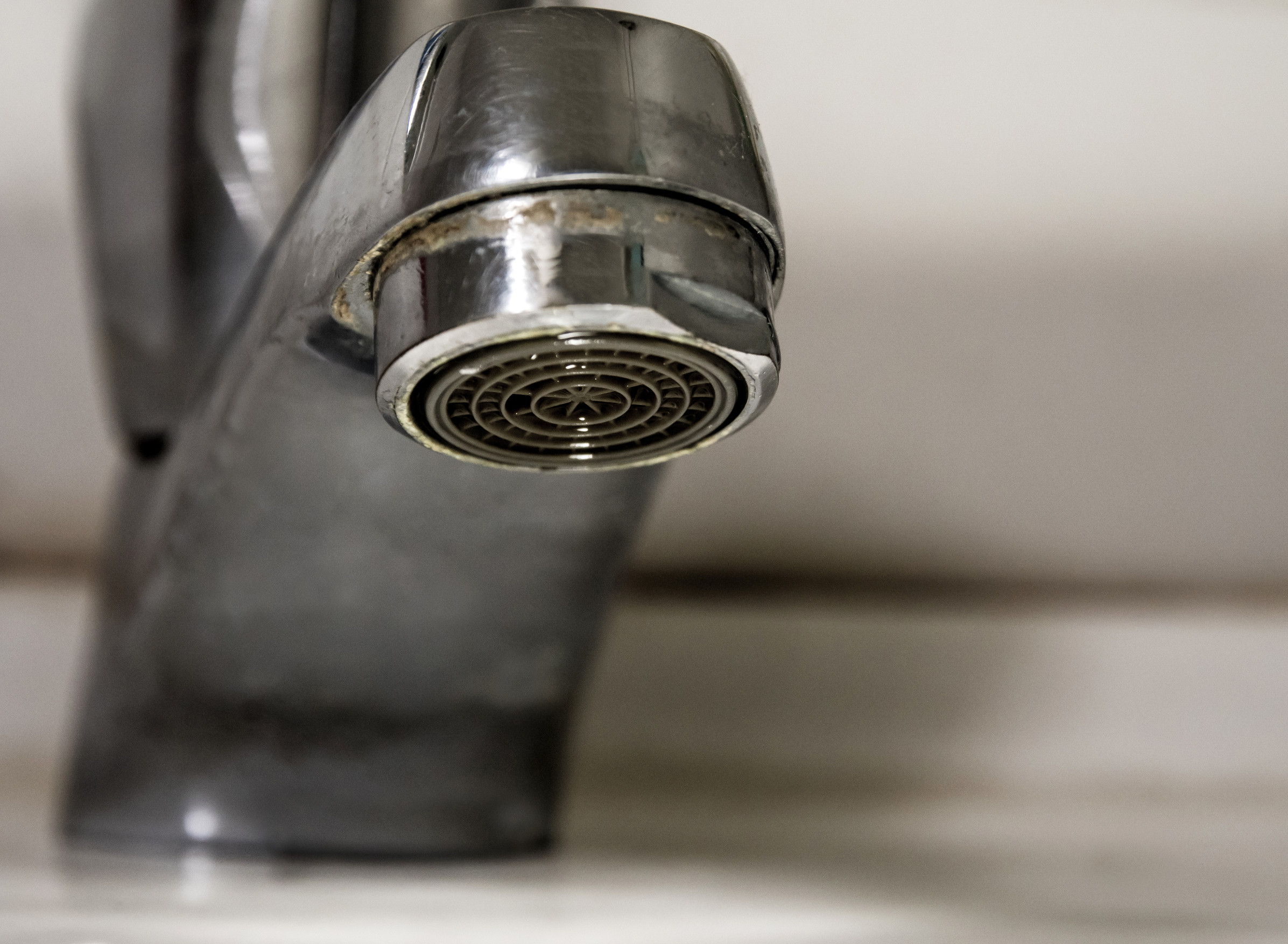
B. Clean Aerators and Showerheads
Mineral deposits from hard water can block aerators (the small screens on faucets) and showerheads.
- Unscrew the aerator/showerhead.
- Soak it in white vinegar overnight to dissolve buildup.
- Scrub gently with an old toothbrush and reattach.
Pro Tip: Install a water softener if hard water is a recurring issue in your area.
Step 2: Inspect the Main Shut-Off Valve
Your home’s main shut-off valve controls water flow into your house. If it’s accidentally partially closed, it can reduce pressure.
- Locate the valve (usually near the water meter or where the main line enters your home).
- Ensure it’s fully open by turning it counterclockwise.
Step 3: Examine the Pressure Regulator
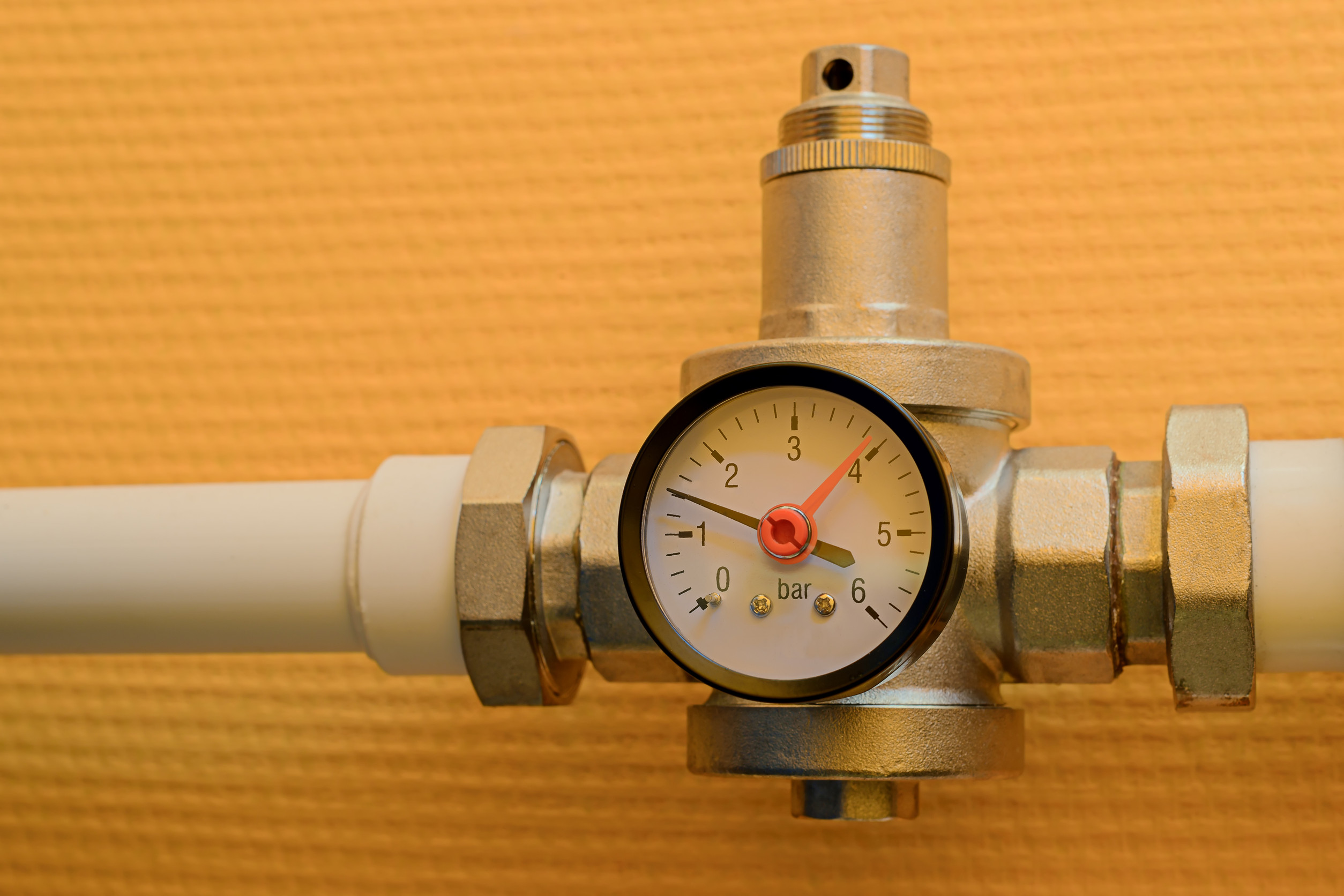
The pressure regulator (or pressure-reducing valve) adjusts incoming water pressure from the municipal supply. A malfunctioning regulator can cause sudden drops in pressure.
- Attach a water pressure gauge to an outdoor spigot or laundry room faucet.
- Normal readings should be 40–80 psi.
- If the pressure is too low, adjust the regulator by turning its screw clockwise (check the manufacturer’s guide).
- If adjustments don’t work, the regulator may need replacement—call a licensed plumber.
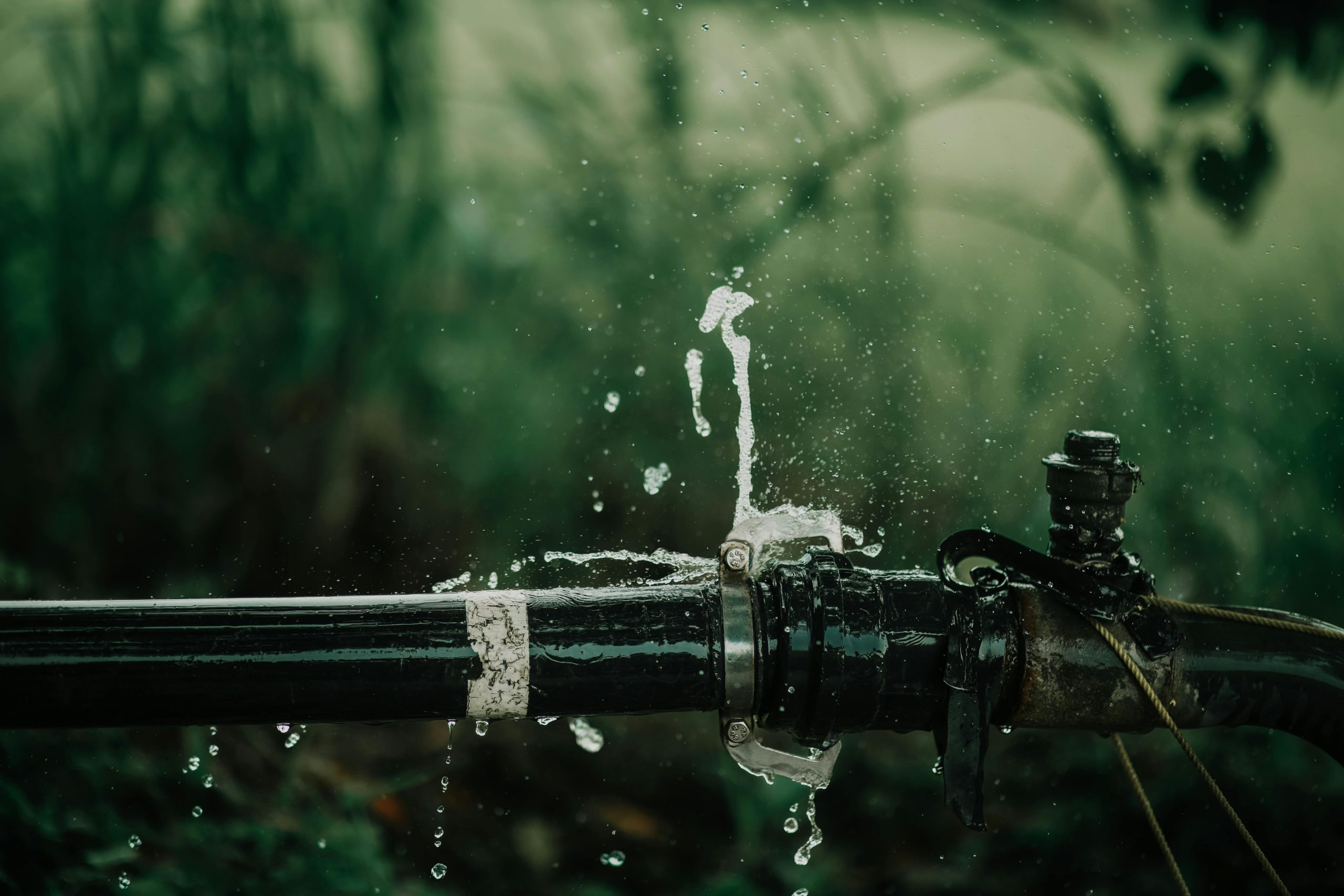
Step 4: Check for Leaks
Hidden leaks divert water away from your fixtures, reducing pressure.
- Look for damp spots, mold, or pooling water under sinks, near appliances, or in the yard.
- Listen for hissing or dripping sounds in walls.
- Check your water meter:
- Turn off all water sources.
- If the meter continues to move, you likely have a leak.
Note: Leaks in underground pipes require professional detection tools. Blue Moon Plumbing uses advanced leak detection technology to pinpoint issues without unnecessary digging.
Don’t wait until small issues turn into big problems. Read this article, “Plumbing Emergency: 5 Signs You Need to Call a Pro Immediately.”
Step 5: Address Pipe Corrosion or Mineral Buildup
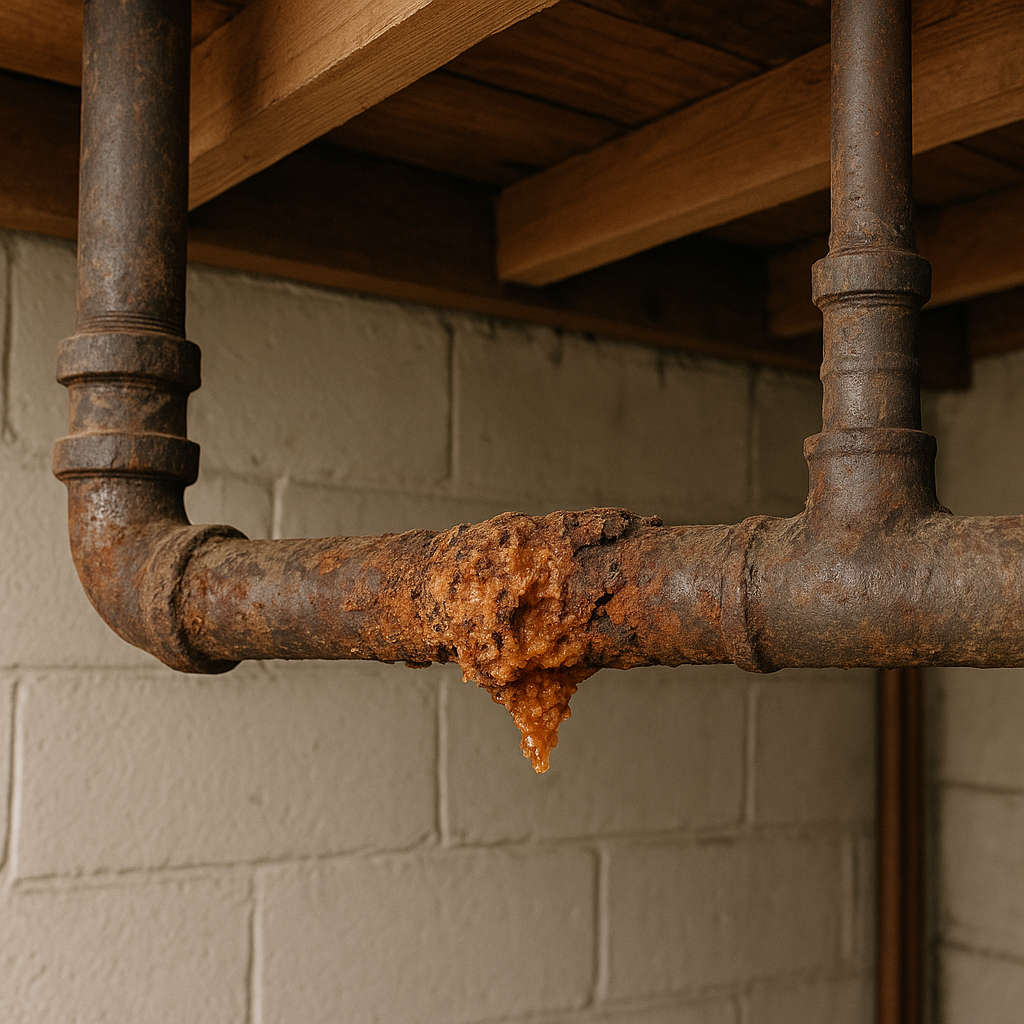
Older homes with galvanized steel pipes are prone to corrosion and scale buildup, which narrow pipe diameter over time.
- Galvanized Pipes: Replace with copper or PEX piping to improve flow.
- Mineral Buildup: For minor blockages, flush pipes by:
- Shutting off the water heater.
- Opening all faucets and letting water run for 20–30 minutes.
For severe buildup, hire a pro to hydro-jet or replace affected pipes.
Step 6: Evaluate the Municipal Supply
Contact neighbors to see if they’re experiencing similar issues. If so, the problem may stem from:
- A closed valve at the street.
- Maintenance work by the water utility.
- A break in the municipal line.
Call your water provider to investigate.
Preventative Maintenance Tips
- Install a Whole-House Water Filter: Reduces sediment and minerals that clog pipes.
- Insulate Pipes: Prevent freezing in winter, which can lead to bursts and pressure loss.
- Schedule Annual Inspections: A Blue Moon plumber can spot early signs of corrosion, leaks, or regulator issues.
Want to keep things flowing smoothly? Visit our Plumbing Service Page and see how we can help.
When to Call Blue Moon Plumbing
While some fixes are DIY-friendly, certain problems require professional expertise:
- Leaks behind walls or underground.
- Failing pressure regulators.
- Whole-house repiping projects.
- Suspected sewer line issues.
Our licensed technicians use camera inspections, pipe locators, and pressure tests to diagnose problems accurately—saving you time, money, and guesswork.
Why Choose Blue Moon Plumbing?
- 24/7 Emergency Service: Water pressure issues don’t wait for business hours.
- Transparent Pricing: No hidden fees, guaranteed.
- Lifetime Workmanship Warranty: We stand by our repairs.
Final Thoughts
Low water pressure is often a symptom of a larger issue, but with the right approach, it’s entirely fixable. Start with simple solutions like cleaning aerators and checking valves, then escalate to professional help if needed. Regular maintenance and prompt repairs will keep your water flowing strong for years to come.
Don’t let low water pressure disrupt your daily life. Contact Blue Moon Plumbing today for a comprehensive inspection, and let us restore your home’s water pressure—and your peace of mind!